Anyone living in the Sunshine State knows the impact of Florida humidity on home maintenance can be significant.
Living in Southwest Florida offers incredible perks, from sunny beaches to warm coastal breezes year-round. However, living in paradise comes with an invisible challenge that every homeowner faces: relentless atmospheric moisture. Because relative humidity levels along the Gulf Coast frequently hover above 80%, indoor and outdoor building materials remain under constant stress. Consequently, unmanaged air moisture can lead to warped wood, peeling paint, and hidden structural damage.
Understanding the impact of Florida humidity on home maintenance empowers homeowners to protect their property value and maintain a healthy living environment.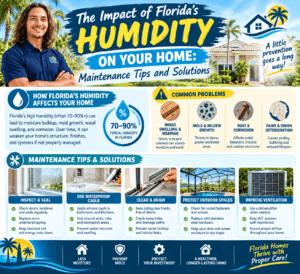 Whether you reside in Cape Coral, Fort Myers, or Naples, proactive care prevents costly repair bills. This comprehensive guide explores how moisture affects your house, essential preventative routines, long-term upgrades, and when to bring in experienced local trade professionals.
Understanding Florida’s Humidity and Its Effects on Homes
To begin with, Southwest Florida’s subtropical climate creates a unique environmental challenge for residential construction. Because heat and moisture work together, warm air carries significantly more water vapor than cold air. As a result, when humid outside air enters air-conditioned indoor spaces, condensation instantly forms on cool surfaces like windows, baseboards, and interior walls.
Furthermore, moisture infiltration causes widespread physical changes to common building materials. For instance, porous materials such as drywall, wood trim, and subflooring absorb ambient water vapor continuously. Over time, this absorption leads to swelling, cracking, and rot. In addition, damp indoor environments create ideal breeding conditions for toxic mold, mildew spores, and dust mites.
Moreover, outdoor coastal conditions compound these interior challenges. During the long summer rainy season, afternoon tropical storms saturate exterior stucco, roof lines, and pool enclosures. Simultaneously, coastal salt air accelerates metal corrosion on window latches, outdoor light fixtures, and AC condenser coils. Therefore, understanding the true impact of Florida humidity on home maintenance is the first step toward long-term protection.
Wood Swelling and Warping: Wooden doors, cabinet frames, and baseboards expand, stick, or crack as they absorb moisture.
Mold and Mildew Growth: High humidity triggers fungal spores within 24 to 48 hours on damp organic surfaces.
Paint and Drywall Degradation: Trapped water vapor causes interior wall paint to blister, peel, or discolor.
Accelerated Metal Corrosion: Moisture combined with coastal salt air rapidly rusts screws, hinges, and exterior fixtures.
Essential Maintenance Tips for Managing Florida Humidity
When managing high moisture levels, consistent preventative routines pay off significantly. Fortunately, several simple maintenance habits protect your living space from moisture-related wear and tear.
Daily and Weekly Indoor Moisture Control
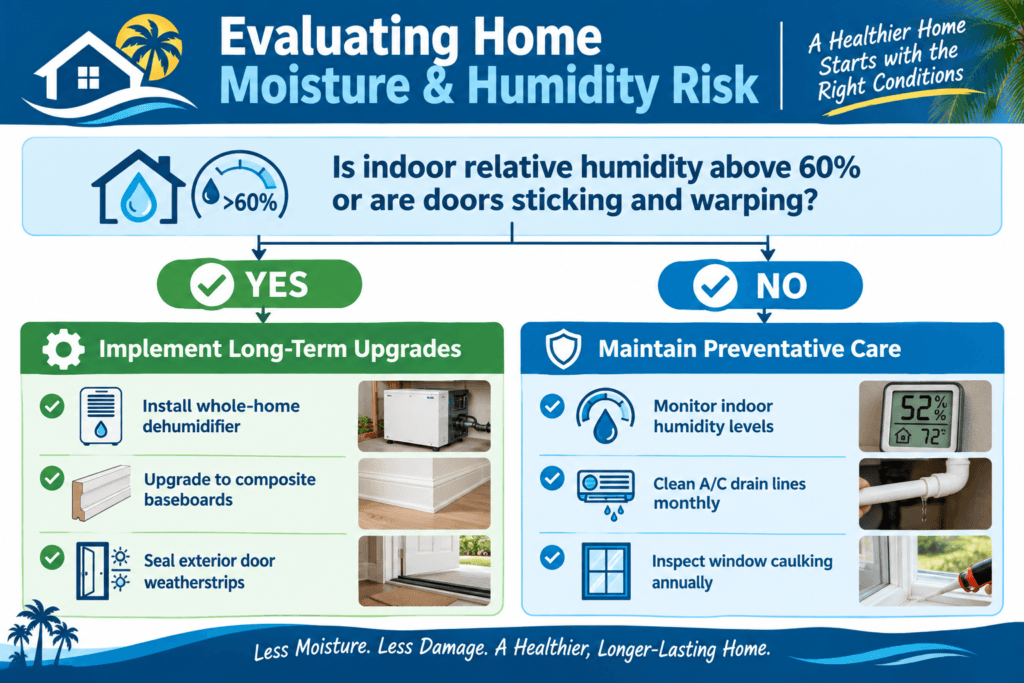
First, keep indoor relative humidity levels between 45% and 55%. If indoor humidity climbs above 60%, your home becomes vulnerable to fungal growth and musty odors.
Run Exhaust Fans: Always operate bathroom exhaust fans during showers and keep kitchen range hoods running while cooking.
Inspect Sliding Glass Door Tracks: Keep sliding door tracks clean so water drains properly through exterior weep holes.
Circulate Air: Run ceiling fans counterclockwise during hot months to promote continuous air movement.
Check A/C Drain Lines: Clear central air conditioning condensate lines regularly using distilled white vinegar to prevent indoor water backups.
Exterior Inspection and Seal Maintenance
Second, maintaining your home’s thermal envelope stops heavy outdoor humidity from leaking inside. In our region, small gaps around doors and windows act as entry pathways for humid air and summer rainwater.
Southwest Florida Home Moisture Prevention & Maintenance Guide
| Home Area | Moisture Impact | Recommended Maintenance Action |
|---|---|---|
| Exterior Doors & Windows | Leaky seals allow humid air and moisture to enter the home. | Replace worn weatherstripping and inspect seals regularly. |
| Bathroom & Kitchen Trim | Standing water and humidity can cause trim to swell, warp, or absorb moisture. | Apply waterproof silicone caulk around moisture-prone areas. |
| Sliding Patio Doors | Clogged weep holes can prevent proper drainage and allow water to enter interior spaces. | Clear door tracks and verify that drainage paths are unobstructed. |
| Lanai & Screen Enclosure | Humidity, rain, and coastal conditions can accelerate corrosion of metal fasteners. | Replace rusted screws with corrosion-resistant stainless steel fasteners. |
Pro tip for Southwest Florida homeowners: Regular inspections and preventive maintenance can help reduce moisture intrusion, prevent costly repairs, and protect your home from the region’s humidity, heavy rainfall, and salty coastal air.
In addition, inspect your exterior stucco and window caulk twice a year. Because tropical heat causes sealants to dry out and shrink, reapplying high-quality exterior caulk keeps wind-driven rain out. Consequently, you protect your structural framing while lowering your monthly cooling costs.
Long-Term Solutions for Humidity Challenges on Home Maintenance
While routine habits help, installing long-term moisture barriers offers the ultimate defense against Gulf Coast climate conditions. When planning home improvements, invest in materials engineered specifically for warm, humid environments.
Dehumidification and Smart Climate Control
First, pair your central air conditioning unit with a dedicated whole-home dehumidifier. While standard air conditioners cool the air, they often cycle off before removing adequate moisture during humid summer days. By integrating a whole-home dehumidifier, you control moisture independently of air cooling. Additionally, installing a smart thermostat verified by ENERGY STAR® lets you monitor indoor moisture levels directly from your phone.
Moisture-Resistant Building Materials
Second, replace traditional wood elements with moisture-proof alternatives during home renovations. For example, PVC baseboards, composite trim, and luxury vinyl plank (LVP) flooring resist water absorption completely. Consequently, these materials will never swell, buckle, or support mold growth during high-humidity seasons.
Furthermore, ensure your attic space has adequate ventilation and radiant barriers. In Southwest Florida, attic spaces routinely reach scorching temperatures, trapping damp air against roof decking. By improving attic air movement, you protect roof trusses and reduce the workload on your home’s HVAC system. Homeowners can learn more about regional ventilation and building standards through the UF/IFAS Extension Program.
When to Seek Professional Help for Humidity Issues in Your Home
Although DIY maintenance handles basic tasks, certain moisture issues demand professional expertise. Because hidden water damage spreads rapidly, delaying professional repairs can jeopardize your home’s structural stability.
Specifically, consider bringing in a licensed handyman or trade specialist if you observe any of these warning signs:
Persistent Wall Stains or Soft Spots: Discolored drywall indicates active plumbing leaks or exterior water entry.
Sticking Exterior Doors: Warped door frames or sagging sliding glass doors require professional alignment and seal replacement.
Rusting Exterior Hardware: Corroded screws on lanai enclosures or hurricane shutters compromise storm safety.
Musty Odors Behind Trim: Lingering smells behind baseboards usually signal hidden moisture accumulation.
Furthermore, local knowledge matters when hiring home repair experts across Bonita Springs, Estero, Sanibel, and Marco Island. Because coastal building codes require strict adherence to wind-borne debris and moisture barrier standards, working with experienced local technicians ensures code-compliant, long-lasting repairs.
Essential Checklist: Assessing the Impact of Florida Humidity on Home Maintenance
Use this handy checklist to evaluate your property’s weather readiness every season:
[ ] Test Bathroom Fans: Verify exhaust fans hold a single sheet of paper against the vent grill while running.
[ ] Inspect Door Weatherstripping: Look for light gaps around front entry doors and garage access entries.
[ ] Check Baseboards for Gaps: Ensure interior baseboards are sealed tightly to flooring to prevent moisture intrusion.
[ ] Clean Sliding Door Drain Holes: Ensure outdoor weep holes on glass door tracks remain free of sand and dirt.
[ ] Examine Window Sealants: Replace cracked exterior caulk around all window perimeters.
Partner with GQ Properties for Expert Moisture Defenses
Ultimately, managing the impact of Florida humidity on home maintenance requires vigilance, proper materials, and expert execution. When you need a trusted local team to keep your home strong, dry, and energy-efficient, GQ Properties is ready to serve you.
As a premier handyman company in Southwest Florida, GQ Properties serves homeowners throughout Cape Coral, Fort Myers, Naples, Bonita Springs, Estero, Sanibel, and Marco Island. Our skilled team understands how intense subtropical heat, coastal air, and tropical storms affect your house. Whether you need baseboard replacements, weatherstripping installation, drywall patching, door realignment, lanai re-screening, or general home repairs, we deliver exceptional craftsmanship tailored to our local climate.
Ready to shield your property from harsh Florida humidity and moisture damage?
Benefits of Hiring a Local Southwest Florida Handyman
Choosing a local expert like GQ Properties means you get:
- ✅ Knowledge of Florida’s climate and building challenges
- ✅ Faster response times
- ✅ Cost-effective solutions
- ✅ Reliable, professional service
We understand the specific needs of homes in coastal and inland Florida communities.
At GQ Properties, we take the stress out of home repairs by handling your property repairs quickly, correctly, and professionally. We proudly serve homeowners and property managers throughout our local communities, including:
Let us take care of your property maintenance needs.
📞 Call: 239-292-3194
📧 Email: services@gqpropertiesfl.com
📝 Request a quote online
GQ Properties — Your Trusted Handyman in Southwest Florida
Useful External Resources for Florida Homeowners
Review current regional structural standards and updates at the Florida Building Code Online.
Read official guidelines on moisture control and mold prevention from the Florida Department of Health.
- Learn about storm protection systems and consumer resources from the Florida Department of Financial Services.
“Need help with repairs or maintenance around your Southwest Florida home? Reach out to GQ Properties FL—we’re here to help.”